Surety
Client Inlandia Institute
Project Surety by Anna Zumbahlen
Services book cover design / book interior design / typesetting / ebook conversion
Year 2025
Anna and I met at AWP in 2025, and I had no idea she had a book in the works. Her publisher Inlandia approaches the design process in a unique way, offering their authors a more collaborative role in the process. Because of this, Anna pushed for me to design her whole book (which I am so grateful for!). I think we made a great team (^:
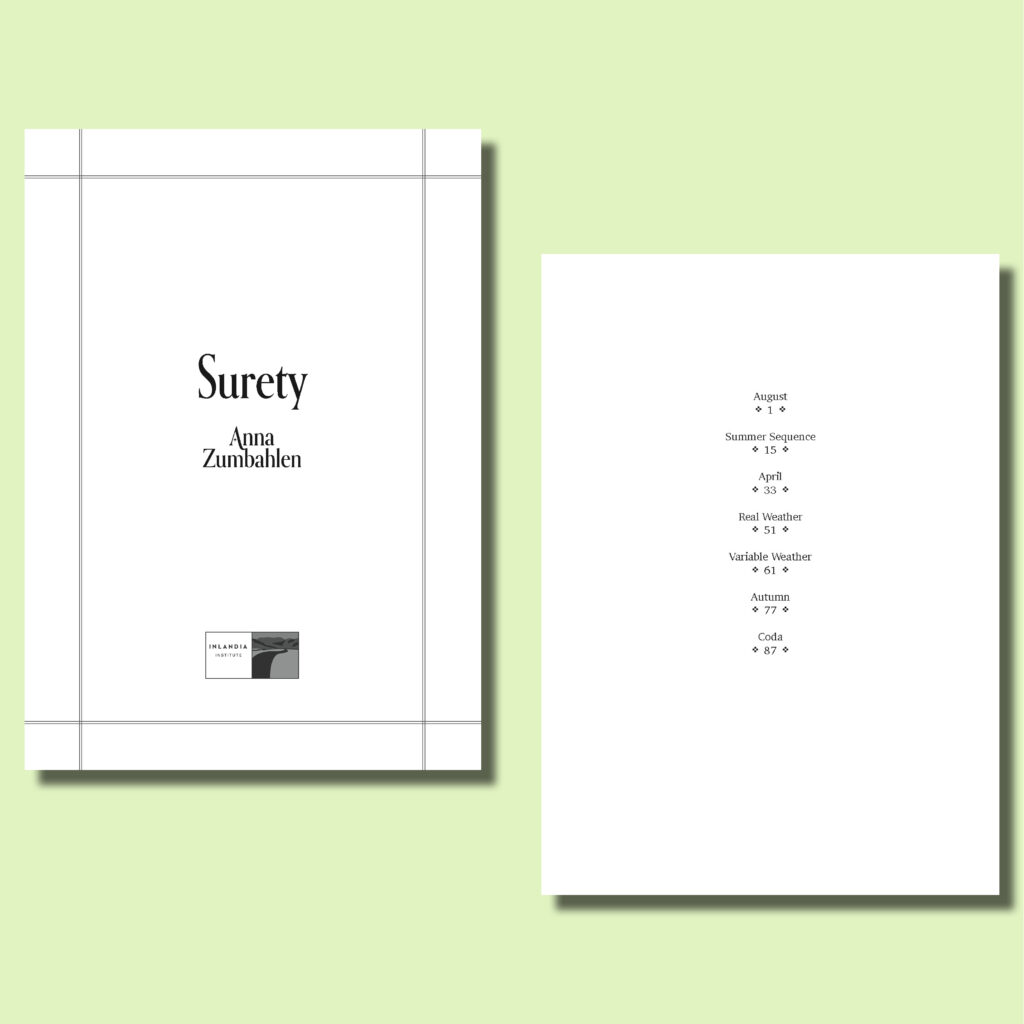
When I’m the designer for both the interior and cover, I almost always opt to work from the inside out if it’s an option. Not only is this how the process used to work, but it also works quite well.
The cover has so much pressure attached to it; if we can just put some work into creating the interior’s vibe first, it becomes easier to work outwards to the cover, clients have clearer expectations, and everyone is happier as a result.
I also suggested a trim size before starting on the interior (5 x 7″), which gave us a thicker book (and thus more of a spine to work with when designing the cover) that stands out on the shelf from the usual 6 x 9″ poetry books that flood the shelves. Although 6 x 9″ can be a great trim size sometimes, it isn’t always; each design and printing decision should be thoughtfully aligned with the specific book.
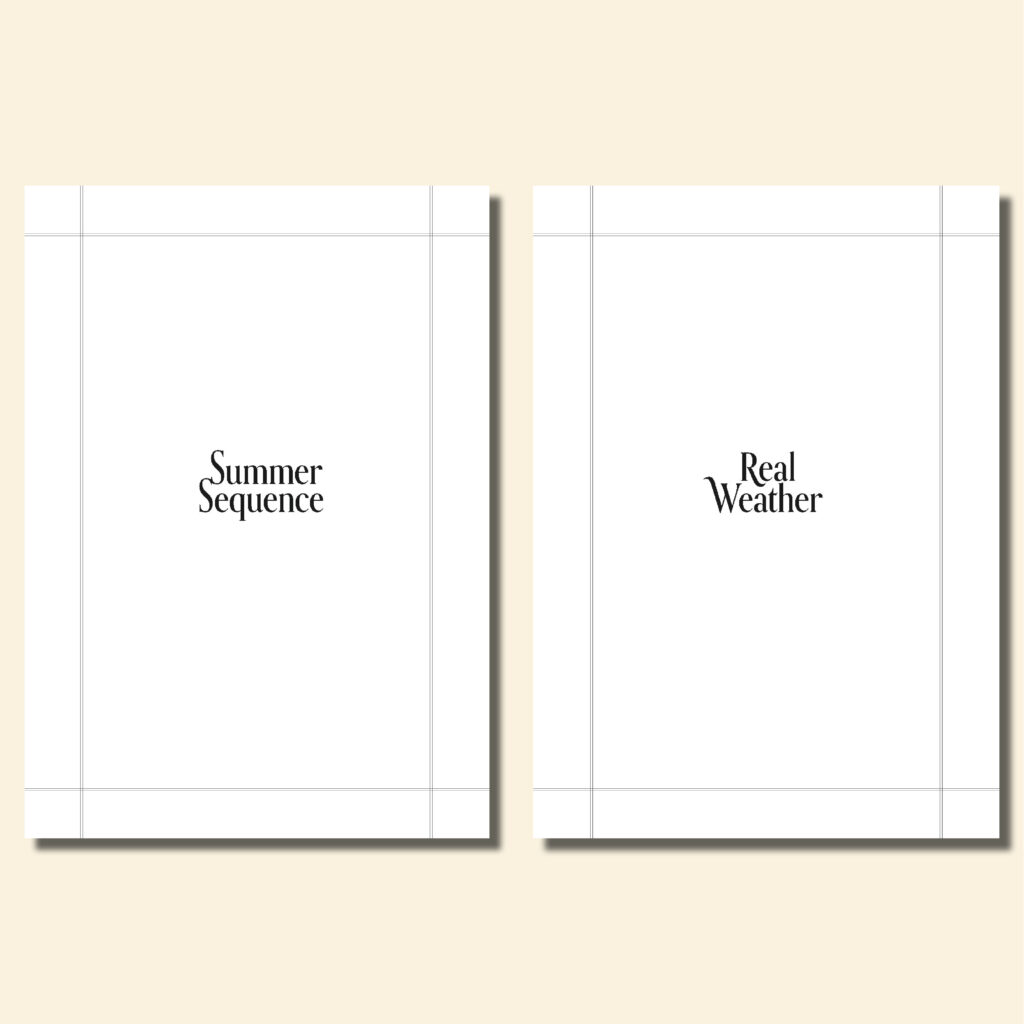
I designed Anna’s part titles with themes from our mood board in mind (vintage borders, traditional placement, and swoopy/swirly details).
A simple border frames the part titles, alluding to imagery/themes related to vignettes throughout the collection.
The titles are also placed in the “optical center” of the page, where our eye is naturally drawn (slightly above the exact center). Placing text in the exact center of the page can actually look like it’s set too far down and may divert the reader’s attention to the design rather than to the content.
The part titles add style and a vintage flair to the page, create a unique look specific to Anna’s book, and pull the reader’s attention to the title.
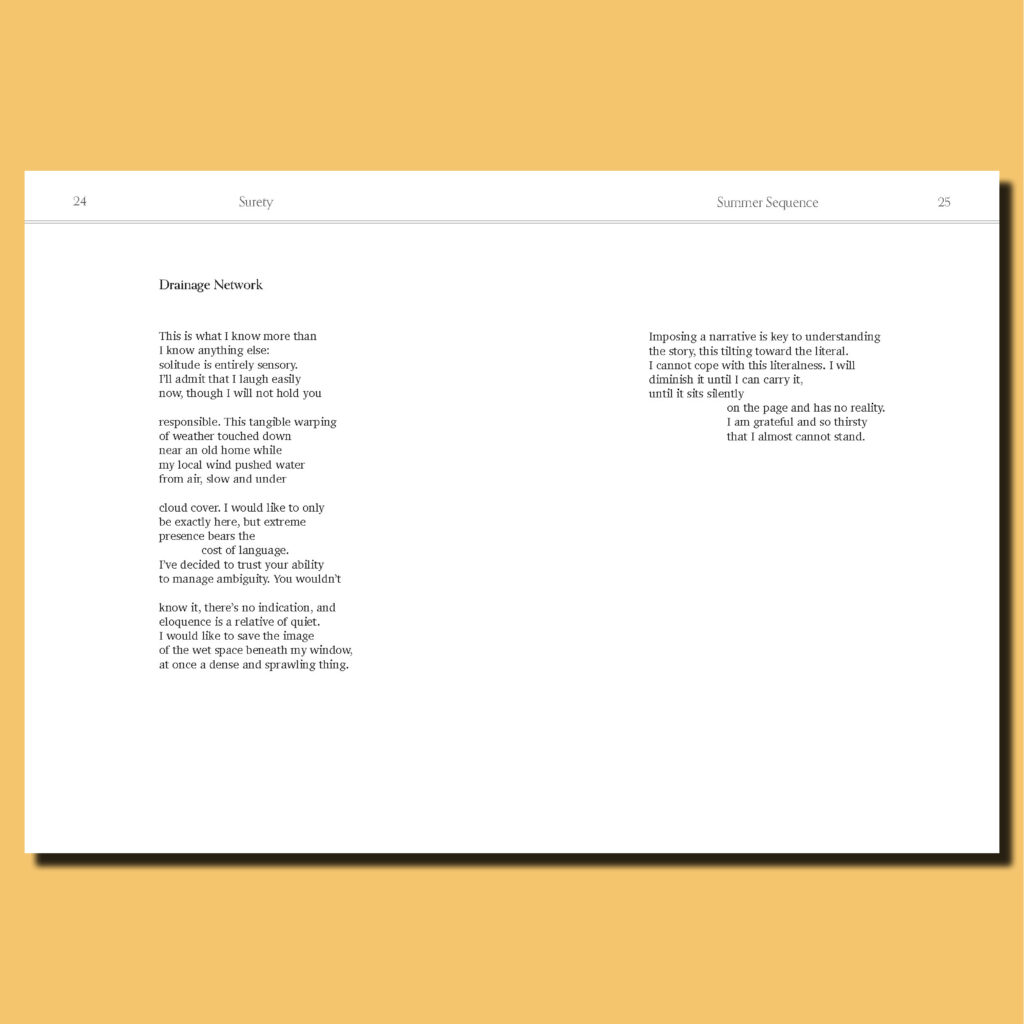
Because some poems have titles and others don’t, it presented a unique challenge. It had to be apparent that poems without titles weren’t a continuation of a previous poem with a title. I also kept in mind our goal for the poems to feel approachable and accessible to a wider audience who may not read poetry regularly.
Poems with titles use the display font Orpheus for the title. Poems without titles use a drop cap letter to start the first line. The drop caps allude to vintage traditions, which was important to Anna, and symbolizes the start of a new poem to the reader.
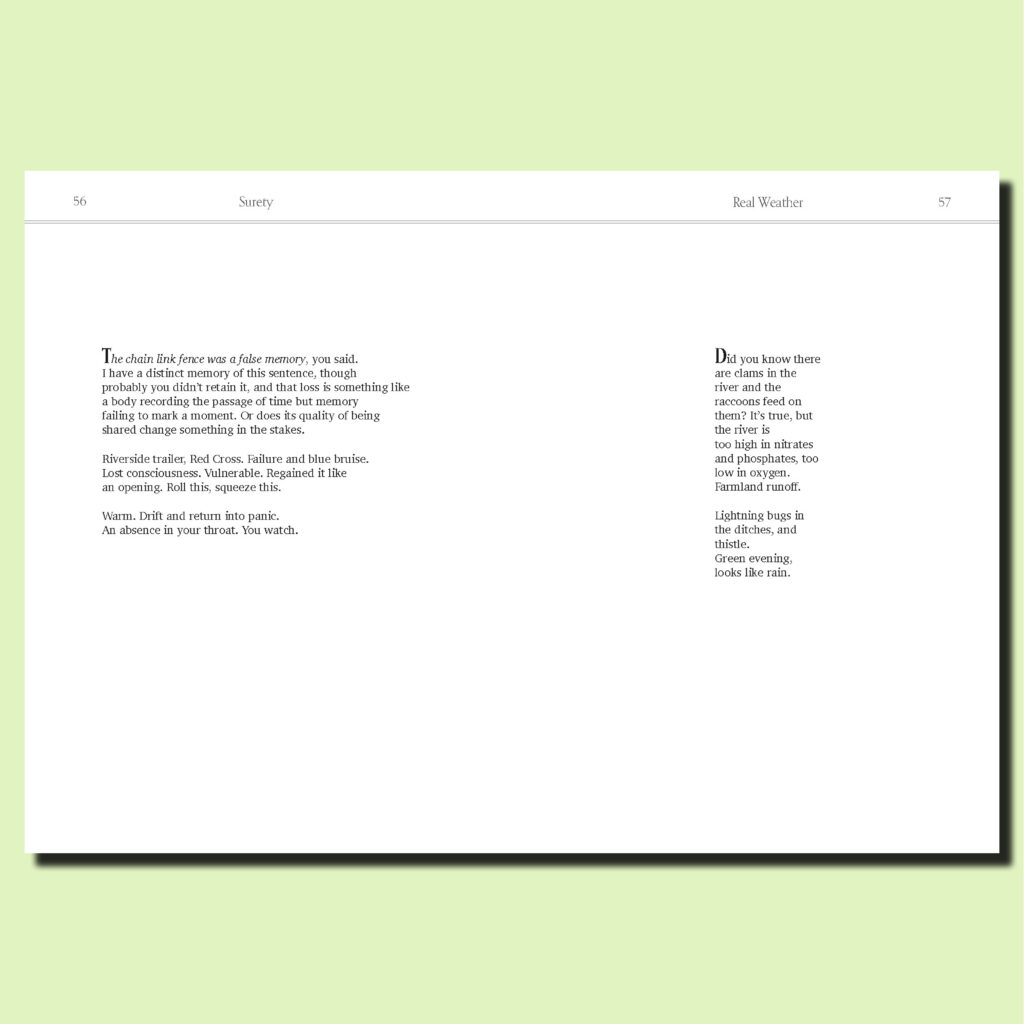
Every poem is positioned in the optical center of the page, making our smaller trim size feel approachable with enough space for the text and running heads to breathe.
This positioning is also a more traditional way to set poetry and makes each poem feel like a precious item by placing it at the focal point on each page.
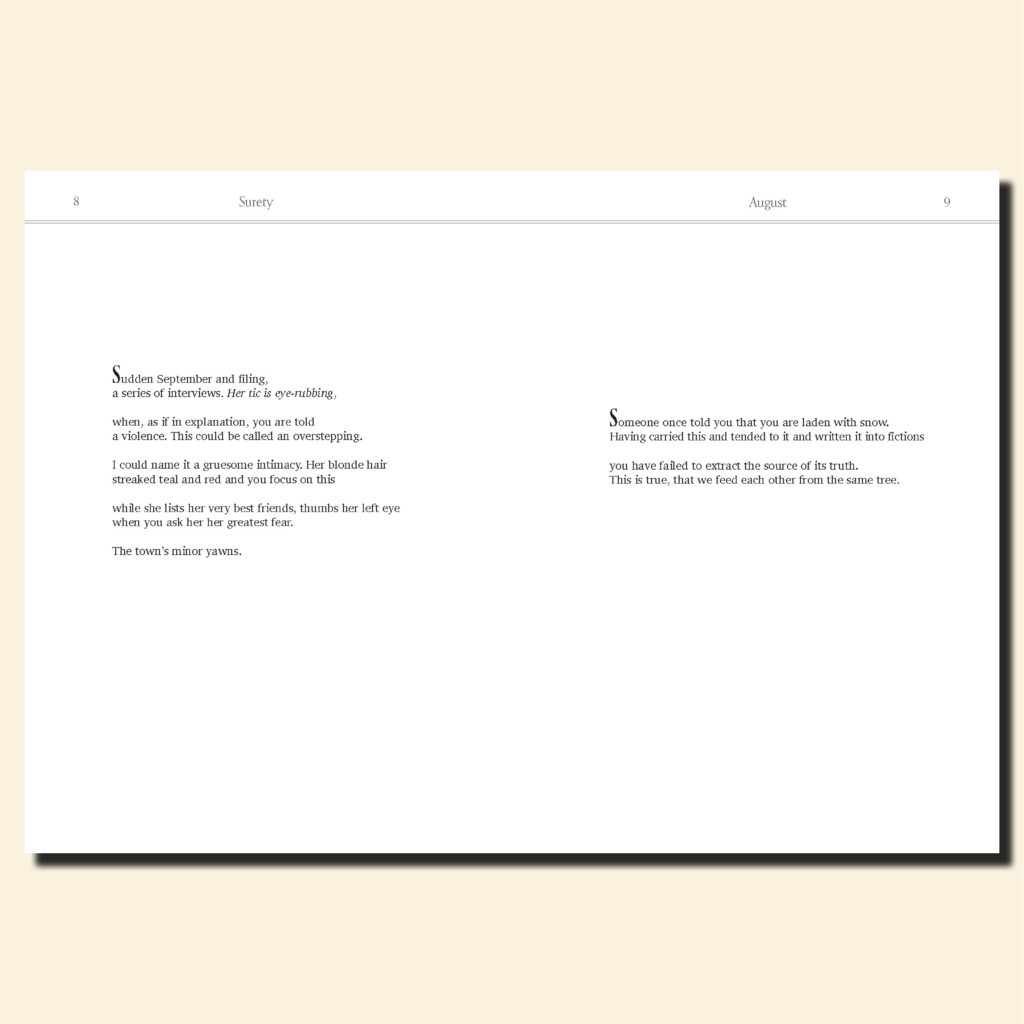
A two-line border runs across the top of the pages, creating a visual boundary that the eye “vignettes.” Bordering the running head visually indicates to the reader that this information doesn’t need to be read; the eye will skim over this.
The border also creates visual cohesion with the part title pages and allows the text to naturally fall across the page. The border anchors, while the poem moves, sways, and descends.
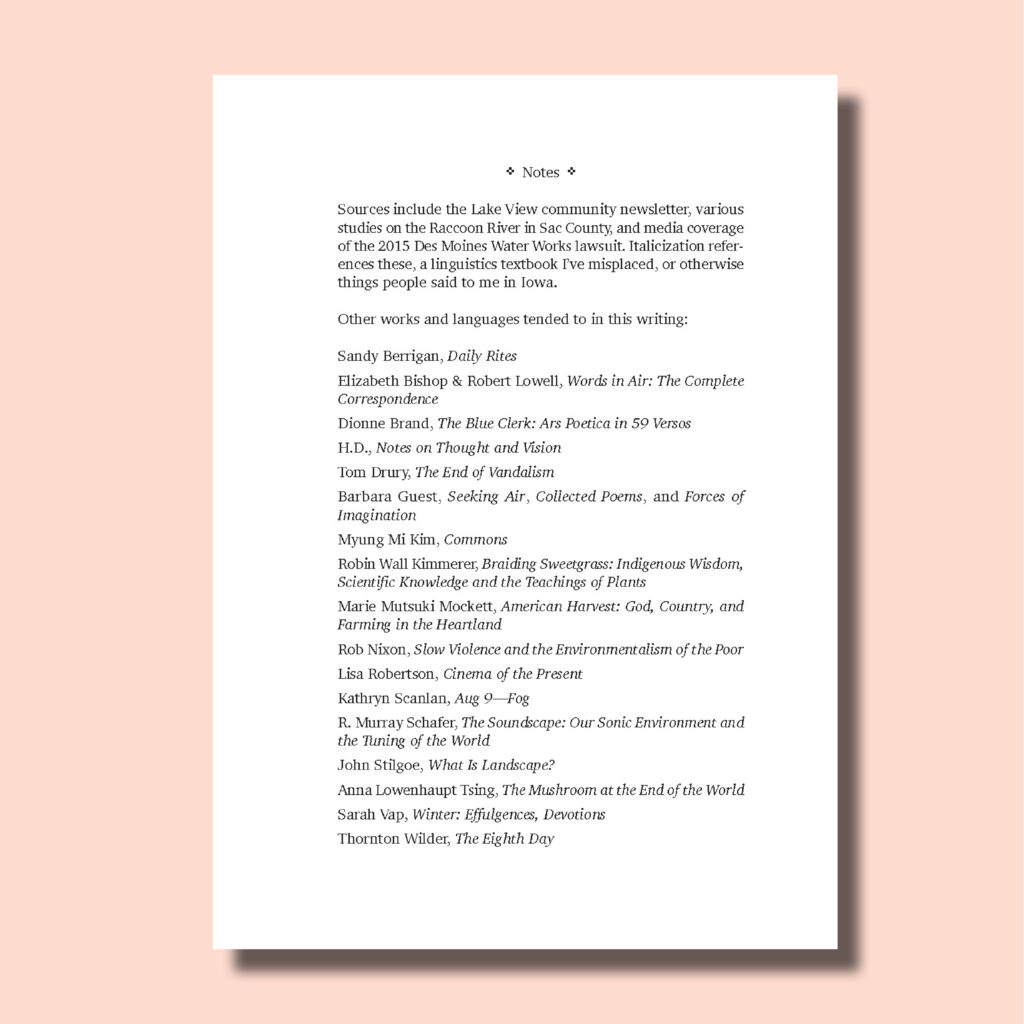
Ornamentation is used on both the interior and cover, adding to the countryside imagery in the book. It also serves as another allusion to vintage traditions.
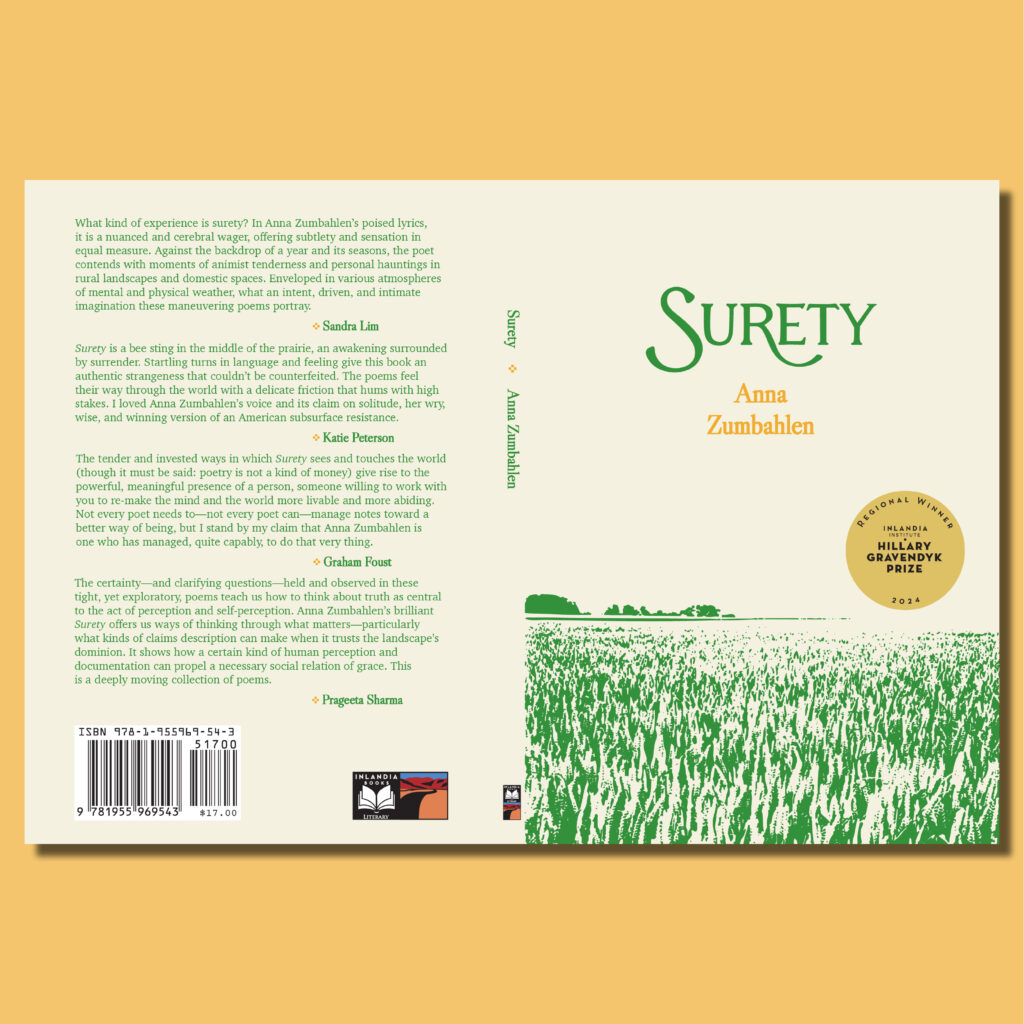
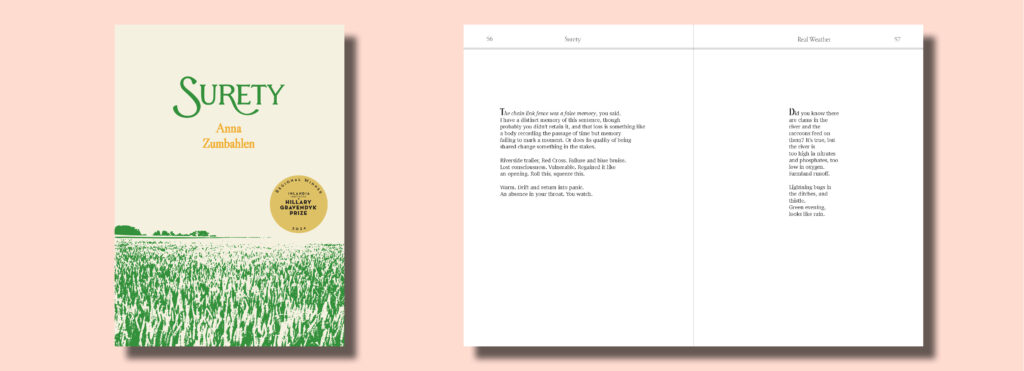
The cover feels classic and vintage but fresh enough to fit right in on a featured books table at the bookstore. The monochromatic colors, type, and negative space contribute to a comforting, homey feeling.
Anna’s book was the winner of Inlandia’s Hillary Gravendyk Prize. The original award seal that Inlandia sent me was quite muted and on the browner side of gold due to its higher cyan and magenta values. I suggested fixing this to simulate a more true gold color, which prints as a vibrant, warm yellow-gold. They loved this refresh!
I also suggested a glossy finish. Inlandia was printing with Ingram, and I knew having going with the soft-touch matte would not only dull the colors, but it screams “self-published.” They wanted something special, and I knew this choice would add to its charm.
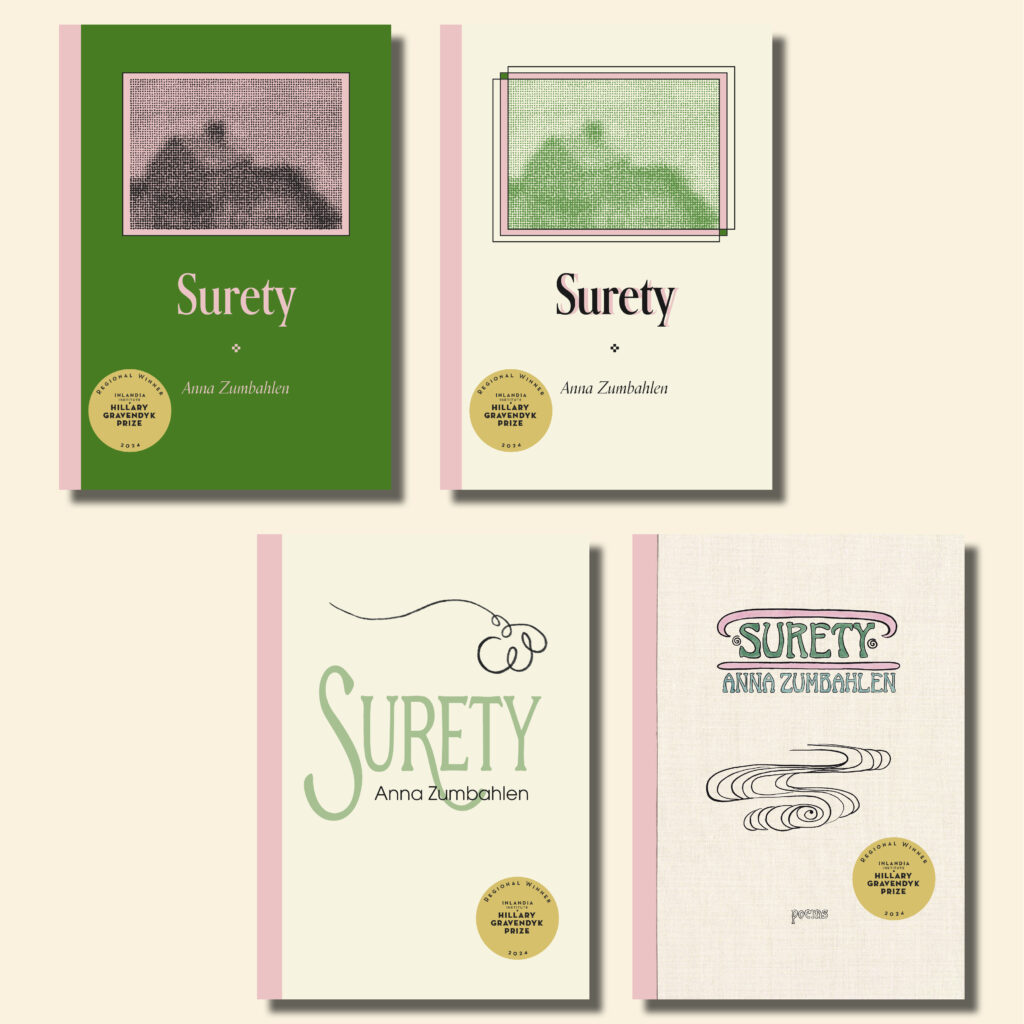
In case you’re curious, these are the unused cover concepts.
Hadley is SO organized and efficient! And the client portal really is a fantastic tool. We’ve never worked with a more professional designer. Every step was outlined clearly and follow through impeccable and the fact that she was willing to work with the author directly meant there were no middlemen, so to speak. Thank you!
— Cati Porter, Former Executive Director at Inlandia Institute